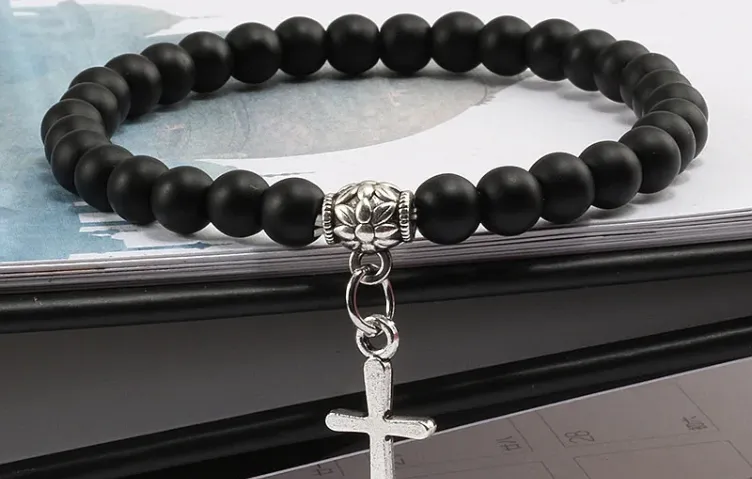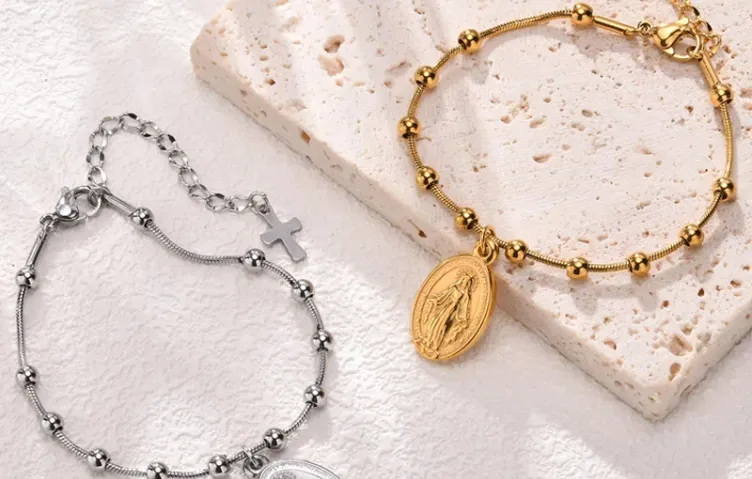
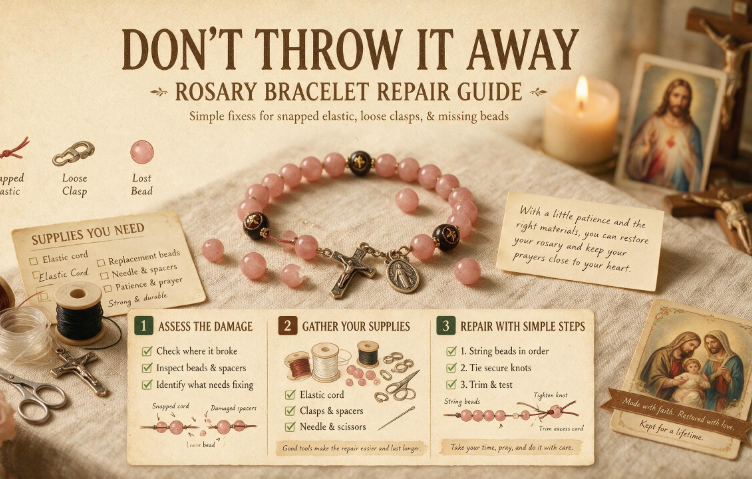
A broken rosary bracelet can be frustrating, especially when it carries personal, spiritual, or sentimental meaning. Maybe the elastic snapped while you were taking it off. Perhaps a clasp came loose. Or one of the beads disappeared somewhere between your home and the car.
Don’t throw it away just yet.
In many cases, fixing a broken rosary bracelet is surprisingly simple. With a few basic tools, some patience, and the right replacement materials, you can restore the bracelet and continue using it as a reminder of faith and prayer.
Let’s look at the most common problems and how to repair them.
Why Rosary Bracelets Break
Rosary bracelets are often worn regularly, so they naturally experience friction and tension.
Common Causes of Damage
Several things can cause a rosary bracelet to break:
Stretched or worn elastic cord
Weak knots
Broken jump rings
Damaged clasps
Cracked beads
Excessive pulling when putting the bracelet on
Exposure to water, sweat, or chemicals
Elastic bracelets are especially vulnerable because the cord is repeatedly stretched when the bracelet passes over your hand.
When a Bracelet Can Be Repaired
The good news is that many common problems are repairable at home.
A snapped cord, loose bead, open jump ring, or damaged clasp usually doesn’t require replacing the entire bracelet.
However, if the crucifix or an important bead is badly damaged, professional repair may be a better option.
What You Need Before Starting
Before taking the bracelet apart, prepare everything you need.
Basic Repair Tools
For a simple repair, you may need:
Replacement elastic cord
Small scissors
Jewelry pliers
Ruler or measuring tape
Small tray or clean cloth
Replacement beads if necessary
Jewelry adhesive suitable for the materials
Work over a clean, flat surface. A tray or towel is particularly helpful because tiny beads have an amazing talent for disappearing.
Choosing Replacement Materials
Try to match the original materials as closely as possible.
For an elastic rosary bracelet, use durable jewelry elastic with a suitable thickness for the bead holes. If the original bracelet uses a metal chain, choose replacement rings or components designed for jewelry making.
Don’t use ordinary household string simply because it’s available. It may stretch, fray, or break quickly.
How to Fix a Broken Elastic Rosary Bracelet
Elastic bracelets are among the easiest rosary bracelets to repair.
Step 1: Gather and Organize the Beads
Collect every bead and component before removing anything.
Lay the beads on a clean surface and photograph the original bracelet if you can. This gives you a visual reference for the original order.
This step matters more than it seems. Once the bracelet comes apart, it’s surprisingly easy to forget where each bead belonged.
Step 2: Remove the Damaged Cord
Carefully cut away the broken elastic.
Don’t pull aggressively on the beads. If the cord has snapped but remains threaded through several beads, gently remove the remaining pieces.
Keep all usable beads in a small container.
Step 3: Thread the Beads
Cut a new piece of elastic slightly longer than the final bracelet length.
Thread the beads back onto the cord in their original arrangement.
Keeping the Beads in the Correct Order
If the bracelet has different-sized beads, a religious medal, or a crucifix, use your photograph as a guide.
Check the pattern before tying anything.
This is your last easy opportunity to rearrange the beads. Once the knot is secured, changing the order becomes much more difficult.
Step 4: Tie and Secure the New Cord
Bring both ends of the elastic together and create a secure jewelry knot.
Pull the cord firmly—but not so aggressively that you stretch it excessively.
Trim the excess cord carefully, leaving enough material to prevent the knot from slipping.
If appropriate for the cord and jewelry materials, a small amount of jewelry adhesive can provide additional security. Allow the adhesive to cure according to its instructions before wearing the bracelet.
Don’t immediately stretch the repaired bracelet over your hand. Give the knot time to settle and the adhesive, if used, time to fully cure.
How to Repair a Chain Rosary Bracelet
Chain bracelets require a slightly different approach.
Reconnecting an Open Jump Ring
A jump ring connects many jewelry components.
If one has opened, use two pairs of small jewelry pliers to gently close the gap.
Don’t pull the ring directly apart sideways. Instead, move the two ends past each other with controlled pressure, then bring them back into alignment.
A properly closed ring should have little or no visible gap.
Replacing a Broken Clasp
If the clasp is damaged, you can replace it with a compatible jewelry clasp.
First, remove the old clasp using jewelry pliers. Then attach the replacement to the existing jump ring or chain.
Before wearing the bracelet, gently test the connection.
A clasp that looks secure but opens under light pressure isn’t ready for daily use.
How to Fix a Broken Rosary Bracelet Cross
Sometimes the bracelet itself is intact, but the cross or crucifix has separated from the connecting ring.
If the ring is simply open, it may be possible to reconnect it with jewelry pliers.
If the cross is cracked, bent, or structurally damaged, however, don’t force it back into place. A professional jeweler or religious goods specialist may be able to repair or replace the component more safely.
What to Do With a Blessed Rosary Bracelet
If your rosary bracelet has been blessed, you may want to treat the repair with additional care and reverence.
A damaged blessed religious item shouldn’t automatically be treated like ordinary broken jewelry. If you’re uncertain about appropriate handling, ask a priest or your local parish for guidance.
The repair itself doesn’t have to diminish the bracelet’s spiritual importance. In fact, restoring a meaningful devotional item can be a thoughtful way to preserve something you value.
When You Should Not Repair It Yourself
DIY repair isn’t always the best answer.
Consider professional help if:
The bracelet contains valuable precious metals.
Several components are broken.
A valuable gemstone has cracked.
The crucifix is severely damaged.
The bracelet has complicated metalwork.
You aren’t confident handling small jewelry components.
A professional repair may cost more than a DIY fix, but protecting an important keepsake can make the expense worthwhile.
How to Prevent a Rosary Bracelet From Breaking Again
Once you’ve repaired your bracelet, prevention becomes the next priority.
Proper Storage
When you’re not wearing the bracelet, store it somewhere dry and protected.
Avoid tossing it into a drawer with keys, watches, and other jewelry. Constant friction can scratch beads and weaken cords.
A small jewelry pouch or separate compartment works well.
Everyday Wearing Tips
Try these simple habits:
Don’t pull the bracelet excessively over your hand.
Remove it before swimming.
Avoid harsh chemicals and cleaning products.
Take it off during activities that put heavy stress on the cord.
Inspect the cord and connections regularly.
Repair small problems before they become major breaks.
Think of it like maintaining a car. A little attention now can prevent a much bigger problem later.
Can a Broken Rosary Bracelet Still Be Used for Prayer?
If a rosary bracelet breaks, the break itself doesn’t erase its spiritual meaning.
You can continue praying with the bracelet if the beads remain usable, or you can repair it first.
Remember that the bracelet is a devotional aid. Its physical condition doesn’t determine the sincerity of your prayer.
What matters most is the faith and intention behind its use.
Final Thoughts
Learning how to fix a broken rosary bracelet can save a meaningful piece of jewelry from being forgotten in a drawer. Whether the problem is a snapped elastic cord, loose jump ring, broken clasp, or separated cross, many repairs are manageable with basic jewelry tools and a little patience.
Before you begin, organize the beads, photograph their original arrangement, and choose replacement materials carefully. If the bracelet is valuable, complicated, or particularly significant to you, professional repair is often the safer choice.
Most importantly, don’t think of a broken bracelet as the end of its story. Sometimes, repairing something meaningful gives it a second life—and a few more years of accompanying you through prayer, reflection, and everyday moments.
FAQs
1. Can I repair a rosary bracelet myself?
Yes. Simple problems such as broken elastic, loose beads, open jump rings, and damaged clasps can often be repaired at home. More complicated or valuable pieces are better handled by a professional.
2. What type of cord should I use to repair an elastic rosary bracelet?
Use durable jewelry elastic that fits through the bead holes and is appropriate for the bracelet’s bead weight. Avoid ordinary sewing thread or household string because these materials may not withstand repeated stretching.
3. How do I stop my repaired rosary bracelet from breaking again?
Avoid overstretching it, remove it during strenuous activities and swimming, keep it away from harsh chemicals, and inspect the cord and metal connections regularly. Proper storage can also extend its life.
4. Should I repair a blessed rosary bracelet myself?
A simple repair may be possible, but if the bracelet has been blessed and you’re uncertain about how to handle or repair it appropriately, consider asking a priest or parish for guidance.
5. What should I do if I lost one of the beads?
If the missing bead is replaceable, look for a similar bead in size, material, and appearance. If it has particular religious or sentimental significance, consider consulting a religious goods specialist or jeweler about finding a suitable replacement.