Choosing the right rosary bracelet size sounds simple, but it’s surprisingly easy to get wrong. Too tight, and the bracelet can feel restrictive. Too loose, and it may slide around your wrist, catch on clothing, or become uncomfortable during prayer.
The good news? You don’t need complicated equipment or a professional jeweler to find the right fit.
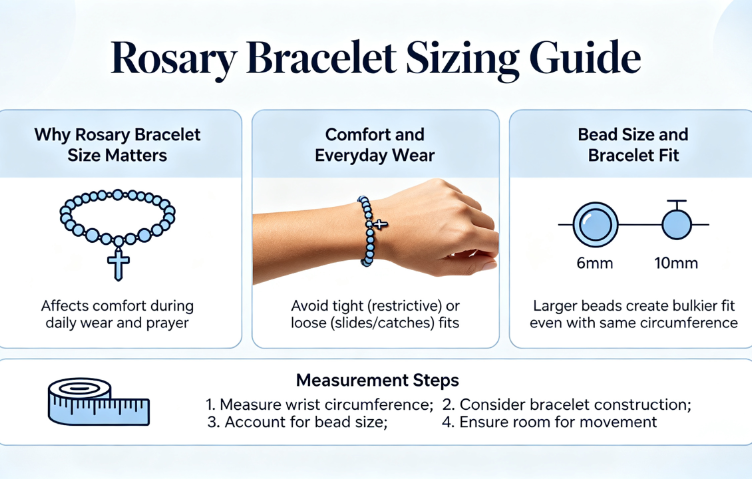
Whether you’re buying a rosary bracelet for men, a rosary bracelet for women, or a religious bracelet as a gift, the basic principle is the same: measure the wrist, understand the bracelet’s construction, consider the bead size, and leave enough room for comfortable movement.
Let’s break it down.
Why Rosary Bracelet Size Matters
A rosary bracelet isn’t just another fashion accessory. Many people wear it throughout the day, use the beads during prayer, and keep it close as a reminder of their faith.
That means comfort matters.
Comfort and Everyday Wear
Imagine wearing shoes that are half a size too small. You might tolerate them for ten minutes, but wearing them all day becomes another story.
A bracelet works the same way.
A properly sized rosary bracelet should sit comfortably on your wrist without squeezing your skin or constantly sliding toward your hand.
Bead Size and Bracelet Fit
The number printed in a product listing doesn’t always tell the whole story.
A bracelet made with 6 mm beads can feel very different from one made with 10 mm beads, even if both have a similar wrist circumference.
Larger beads occupy more space around the wrist and can create a bulkier fit. Therefore, bead diameter should be considered alongside bracelet length.
How Rosary Bracelet Sizes Are Measured
Before buying a bracelet, understand one important distinction: wrist circumference is not necessarily the same as bracelet length.
Wrist Circumference vs. Bracelet Length
Your wrist circumference is the distance around your wrist.
Bracelet length is the total length of the bracelet when laid flat or measured according to the manufacturer’s method.
For example, if your wrist measures 7 inches, a 7-inch bracelet may fit quite snugly. You may prefer a bracelet slightly longer than your actual wrist circumference for everyday comfort.
This small difference can make a big difference.
Where to Measure Your Wrist
Measure around the wrist where you normally want the rosary bracelet to sit.
For most people, that’s just above the wrist bone.
Don’t measure around your hand or the widest part of your forearm. Those measurements won’t give you a useful bracelet size.
How to Get an Accurate Measurement
Keep your wrist relaxed while measuring.
Don’t pull the measuring tape tightly against your skin. It should touch the wrist without squeezing it.
Write down the measurement in inches or centimeters, then compare it with the bracelet manufacturer’s sizing information.
Rosary Bracelet Size Chart
A general guide can help you estimate the appropriate size:
| Wrist Circumference | Suggested Bracelet Size | Typical Fit |
| 5.5–6 inches | 6–6.5 inches | Small / snug |
| 6–6.5 inches | 6.5–7 inches | Small to medium |
| 6.5–7 inches | 7–7.5 inches | Medium |
| 7–7.5 inches | 7.5–8 inches | Medium to large |
| 7.5–8 inches | 8–8.5 inches | Large |
| 8–8.5 inches | 8.5–9 inches | Extra large |
These are general recommendations rather than universal standards. Bracelet construction, bead diameter, clasp design, and the desired fit can all affect the final size.
Small Wrist Sizes
People with smaller wrists often find that oversized beads make a bracelet look and feel bulky.
A bracelet with smaller beads can provide a more balanced appearance while remaining comfortable during daily wear.
Medium Wrist Sizes
Medium wrist measurements generally offer the widest range of choices.
Both smaller and medium-sized beads can work well, depending on whether you prefer a minimalist or more substantial appearance.
Large Wrist Sizes
For larger wrists, don’t simply choose a longer bracelet and ignore bead dimensions.
A bracelet may technically fit but still feel cramped if the beads are large and tightly packed.
Look for appropriate length and sufficient flexibility.
How to Measure Your Wrist at Home
You don’t need a jewelry measuring tool.
Using a Measuring Tape
A flexible tailor’s measuring tape is the easiest option.
Wrap it around your wrist, note the circumference, and record the measurement.
Measure twice if necessary. A one-centimeter mistake can turn a comfortable bracelet into an annoying one.
Using String or Paper
No measuring tape? No problem.
Wrap a piece of non-stretch string or a thin strip of paper around your wrist. Mark where the ends meet, then lay the string or paper against a ruler.
The result is your approximate wrist circumference.
Avoid stretchy materials because they can produce a measurement that’s smaller than your actual wrist.
How Much Extra Room Should a Rosary Bracelet Have?
Once you know your wrist measurement, you need to decide how you want the bracelet to fit.
Snug Fit
A snug fit sits close to the skin and moves very little.
This style works well if you dislike bracelets sliding around your wrist.
However, don’t make it so tight that the beads press into your skin.
Comfortable Everyday Fit
For most people, a small amount of additional room is ideal.
This gives the bracelet enough space to move naturally while remaining secure.
For everyday rosary bracelets, this is often the safest choice because you may wear the bracelet for several hours at a time.
Loose Fit
A loose bracelet creates more movement and a relaxed appearance.
Some people like this style because it feels less restrictive. However, excessive looseness can cause the bracelet to slide over the wrist or become caught on objects.
If you’re using the bracelet during prayer, too much movement may also make handling the beads less convenient.
Choosing the Right Bead Size
Bracelet length isn’t the only sizing decision.
Small Beads
Small beads create a lightweight, understated appearance.
They’re particularly suitable for minimalist rosary bracelets and people who prefer subtle religious jewelry.
They also tend to feel less bulky during typing, driving, or other everyday activities.
Medium Beads
Medium-sized beads provide a good balance between visibility and comfort.
They’re large enough to handle easily during prayer while remaining practical for daily wear.
For many buyers, this is the sweet spot.
Large Beads
Large beads create a stronger visual presence.
They’re often chosen for men’s rosary bracelets or designs intended to look substantial. However, they can add weight and make the bracelet feel tighter than expected.
If you prefer large beads, consider leaving additional room around the wrist.
How Bracelet Materials Affect Sizing
The construction of a rosary bracelet can change how it fits.
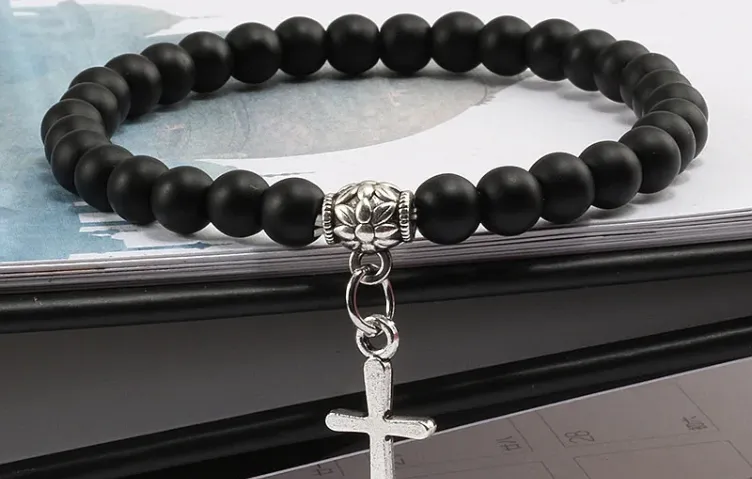
Elastic Rosary Bracelets
Elastic bracelets are flexible and easy to put on.
They can accommodate small differences in wrist size, making them a popular choice for everyday rosary bracelets.
However, elastic cord can stretch or weaken over time, particularly if the bracelet is repeatedly pulled over the hand.
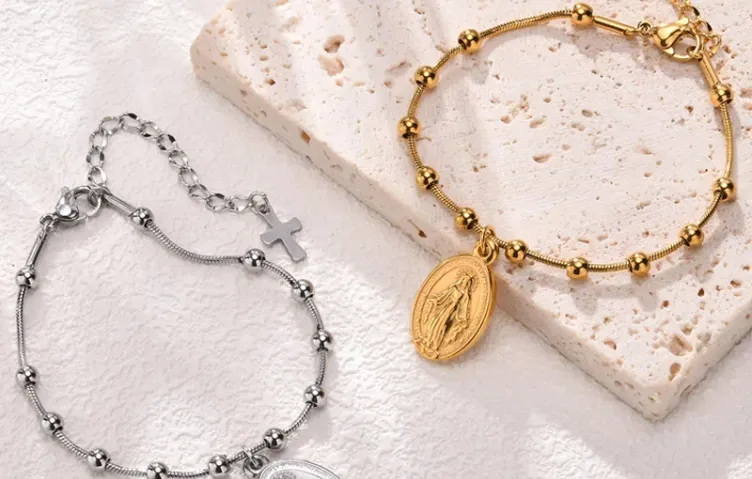
Chain Rosary Bracelets
Chain bracelets generally provide a more structured fit.
Some include clasps or extension chains, allowing the wearer to adjust the size slightly.
They’re a good option if you want a polished jewelry appearance.
Adjustable Bracelets
Adjustable designs are particularly useful when you’re uncertain about sizing.
Sliding knots, extension chains, or adjustable closures can provide greater flexibility.
If you’re buying a bracelet as a gift, an adjustable style can remove much of the guesswork.
Choosing the Right Rosary Bracelet Size for Men
Men’s wrists are often larger, but there’s no universal “men’s size.”
The best approach is always to measure.
Men who prefer a bold style may choose larger beads and a slightly looser fit. Those who want discreet religious jewelry may prefer smaller beads and a closer fit.
For a men’s rosary bracelet, pay particular attention to durability as well as size. Stainless steel, leather, natural stone, and sturdy elastic constructions are popular choices for everyday wear.
Choosing the Right Rosary Bracelet Size for Women
Women’s wrists vary considerably, so avoid assuming that every woman needs a small bracelet.
Measure whenever possible.
A woman who prefers delicate jewelry might enjoy smaller beads and a snug-to-medium fit. Someone who likes natural stones or chunky accessories may prefer larger beads and additional wrist room.
The goal isn’t to follow a gender-based rule. It’s to create a comfortable fit that matches the wearer’s wrist and personal style.
Choosing a Rosary Bracelet Size as a Gift
Buying a bracelet for someone else creates an obvious challenge: How do you know their wrist size without asking?
When You Don’t Know the Recipient’s Wrist Size
Start with adjustable designs.
If adjustment isn’t possible, consider discreetly checking an existing bracelet the recipient wears. Measuring its inside circumference can provide a useful estimate.
You can also ask a family member for help if appropriate.
Avoid guessing based solely on whether the recipient is male or female. Body proportions vary too much for that to be reliable.
Common Rosary Bracelet Sizing Mistakes
Several mistakes appear repeatedly.
Mistake 1: Measuring too tightly.
This produces a wrist measurement smaller than reality.
Mistake 2: Ignoring bead size.
Large beads can change the bracelet’s feel and appearance.
Mistake 3: Assuming every brand uses the same sizing system.
Different manufacturers may measure bracelet length differently.
Mistake 4: Forgetting about daily movement.
Your wrist needs some room to move naturally.
Mistake 5: Choosing appearance over comfort.
A beautiful bracelet that you can’t comfortably wear isn’t a good purchase.
How to Test the Fit Before Wearing It Daily
Once your bracelet arrives, don’t immediately wear it for an entire day.
Try it for several minutes first.
Move your wrist. Bend your hand. Rotate the bracelet. Try moving your fingers across the beads as you would during prayer.
Ask yourself:
Does it pinch?
Does it slide excessively?
Can I move my hand comfortably?
Do the beads feel easy to handle?
Does the clasp stay secure?
If the answer is yes across the board, you’ve probably found a good fit.
Final Thoughts
Choosing the right rosary bracelet size comes down to three things: accurate wrist measurement, appropriate bracelet length, and personal comfort. Don’t rely on generic labels such as small, medium, or large without checking the actual measurements.
For everyday use, aim for a fit that feels secure but doesn’t squeeze. Consider bead diameter, bracelet material, and whether the design stretches or adjusts. If you’re buying a gift and don’t know the recipient’s wrist size, an adjustable bracelet is usually the safest option.
A well-fitted rosary bracelet should feel almost effortless on your wrist. You shouldn’t constantly notice it because it’s too tight or too loose. Instead, it should quietly accompany you through the day—comfortable enough to wear, practical enough for prayer, and meaningful enough to become part of your daily expression of faith.
FAQs
1. How do I know what size rosary bracelet I need?
Measure the circumference of your wrist with a flexible measuring tape or piece of string. Then compare that measurement with the bracelet’s actual sizing information. Add a small amount of extra room if you prefer a comfortable everyday fit.
2. Should a rosary bracelet be tight or loose?
For most people, a comfortable middle ground works best. It should sit securely without squeezing your wrist, while allowing enough movement for normal daily activities and prayer.
3. What is a common rosary bracelet size for adults?
There is no single standard adult size. Many adult bracelets fall around the 7–8.5-inch range, but the correct size depends on the individual’s wrist circumference and preferred fit.
4. Do larger rosary beads require a larger bracelet?
Not necessarily, but larger beads can make a bracelet feel bulkier and reduce flexibility. If you choose large beads, consider the overall construction and allow enough room for comfortable movement.
5. What is the best rosary bracelet size for a gift?
If you don’t know the recipient’s wrist measurement, an adjustable rosary bracelet is usually the safest choice. If the bracelet isn’t adjustable, discreetly measuring a bracelet they already wear can provide a better estimate than guessing based on gender or appearance.