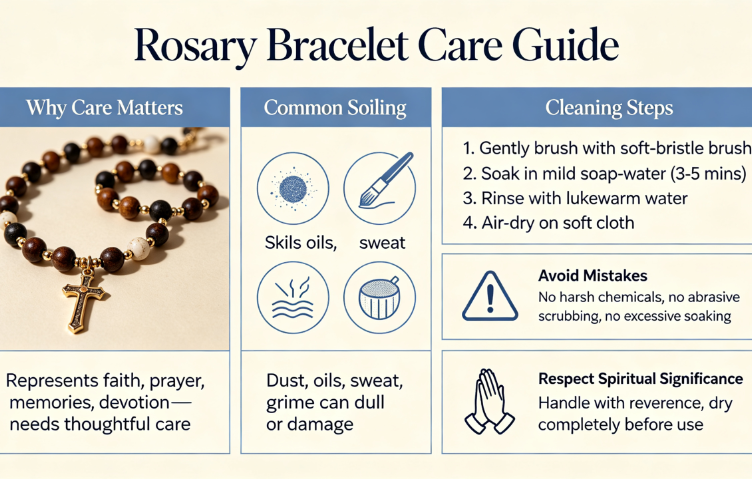
A rosary bracelet is much more than an accessory. For many people, it represents faith, prayer, cherished memories, and personal devotion. Whether it’s a gift from a loved one, a keepsake from a special religious occasion, or part of your daily routine, your rosary bracelet deserves thoughtful care.
Like any piece of jewelry, a rosary bracelet naturally collects dust, skin oils, sweat, and everyday grime. Over time, these elements can dull its appearance or even damage delicate materials if left untreated.
The good news? Cleaning a rosary bracelet safely is simple—as long as you use the right methods.
In this guide, you’ll learn how to clean different types of rosary bracelets, avoid common mistakes, and keep your bracelet looking beautiful while respecting its spiritual significance.
Why Proper Cleaning Matters
Cleaning your rosary bracelet isn’t just about making it shine. Proper care helps preserve both its beauty and its meaning.
Think of it like caring for a treasured family photograph. The picture may fade over time without protection, but with gentle care, it can last for generations.
The same is true for a rosary bracelet.
Protecting Its Spiritual Value
For many Christians, a rosary bracelet is a daily reminder of faith and prayer. While cleaning doesn’t increase or decrease its spiritual significance, maintaining it with respect reflects appreciation for what it represents.
A clean, well-maintained bracelet is often treated with the same care people give to treasured Bibles, crosses, or other devotional items.
Extending Its Lifespan
Regular cleaning helps:
Remove body oils
Prevent dirt buildup
Reduce metal tarnish
Protect elastic cords
Preserve bead finishes
Maintain shine and color
With proper maintenance, a quality rosary bracelet can remain beautiful for many years.
Know Your Rosary Bracelet Material Before Cleaning
Not every rosary bracelet should be cleaned the same way.
The safest cleaning method depends entirely on the material.
Using the wrong cleaner may cause discoloration, scratches, or even permanent damage.
Let’s look at the most common materials.
Wooden Rosary Bracelets
Wood remains one of the most traditional materials used in rosary bracelets.
Popular woods include:
Olive wood
Sandalwood
Rosewood
Ebony
Walnut
Wood offers warmth and natural beauty, but it also absorbs moisture.
That means soaking a wooden bracelet in water is one of the quickest ways to damage it.
Instead, treat wooden beads like fine furniture—gentle cleaning preserves their natural finish.
Silver Rosary Bracelets
Sterling silver rosary bracelets are elegant but naturally tarnish over time.
Exposure to:
Air
Humidity
Skin oils
Perfume
Sweat
can gradually create a dark film on the metal.
Fortunately, this doesn’t mean the bracelet is damaged.
Silver simply requires occasional polishing using products specifically designed for jewelry.
Avoid abrasive household cleaners, as they can scratch the surface.
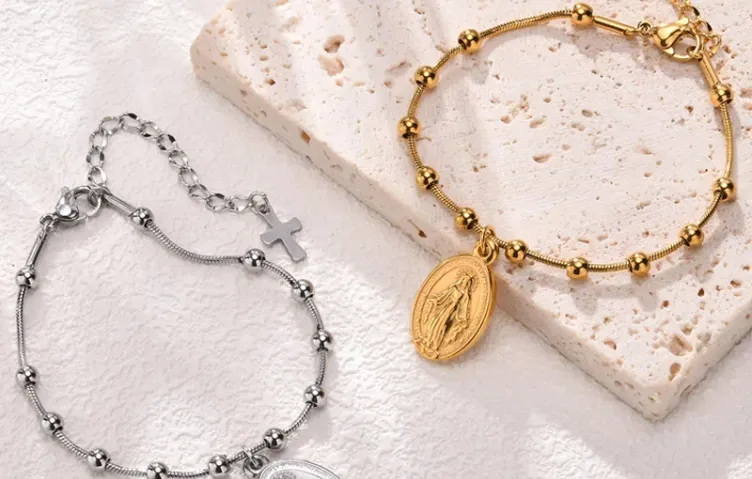
Stainless Steel Rosary Bracelets
Stainless steel is one of the easiest materials to maintain.
It’s resistant to:
Rust
Tarnish
Corrosion
Daily wear
Because of its durability, stainless steel is an excellent choice for everyday rosary bracelets.
Most of the time, warm water and a soft microfiber cloth are enough to restore its shine.
Gemstone Rosary Bracelets
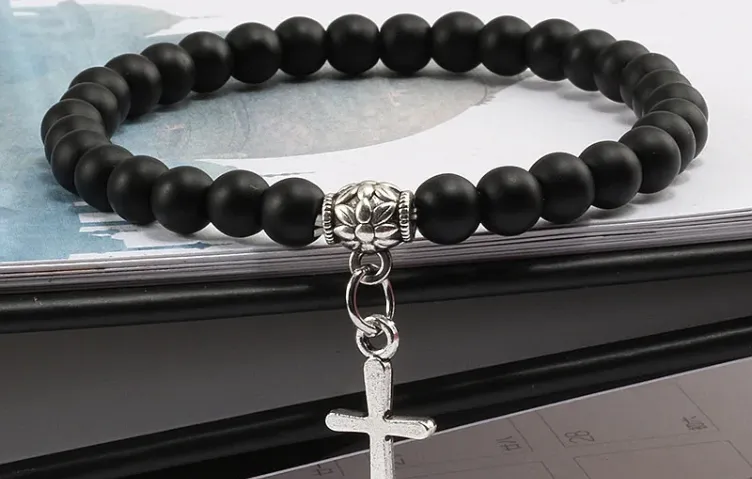
Many modern rosary bracelets feature natural stones such as:
Black Onyx
Tiger Eye
Lava Stone
Jasper
Amethyst
Hematite
These materials each have unique properties.
Some stones are porous, meaning they can absorb liquids and chemicals.
Others are relatively hard but may still scratch if cleaned with rough materials.
Gentle cleaning is always the safest choice.
Cleaning Supplies You’ll Need
Before you begin, gather a few simple tools.
Fortunately, you probably already have most of them at home.
Recommended supplies include:
Soft microfiber cloth
Cotton swabs
Soft-bristle toothbrush
Small bowl
Mild dish soap
Distilled water
Jewelry polishing cloth (for silver)
Clean towel
Notice what’s missing?
There is no need for bleach, alcohol, ammonia, or harsh chemical cleaners.
When it comes to religious jewelry, less is often more.
Step-by-Step Guide: How to Clean a Rosary Bracelet Safely
Now let’s clean your bracelet.
The process varies slightly depending on the material, but one principle always applies:
Be gentle.
Imagine you’re cleaning a valuable antique rather than scrubbing a kitchen countertop.
Slow, careful movements help preserve delicate details.
Step 1: Inspect the Bracelet
Before cleaning, carefully examine the bracelet.
Look for:
Loose beads
Cracked stones
Frayed elastic
Bent jump rings
Loose crosses or medals
If the bracelet is already damaged, repair it before introducing any moisture.
Cleaning won’t fix structural problems—and may make them worse.
Step 2: Remove Surface Dust
Using a dry microfiber cloth, gently wipe each bead.
This removes:
Dust
Skin oils
Fingerprints
Everyday dirt
You may be surprised how much brighter the bracelet looks after this simple step.
Sometimes, that’s all the cleaning it needs.
Step 3: Prepare a Gentle Cleaning Solution
If deeper cleaning is necessary:
Fill a small bowl with lukewarm distilled water.
Add one or two drops of mild dish soap.
Stir gently until mixed.
The solution should feel barely soapy—not bubbly like dishwashing water.
Strong soap leaves residue behind.
Step 4: Clean According to the Material
Different materials require different techniques.
The following section explains the safest cleaning methods for wood, silver, stainless steel, and gemstones.
How to Clean Different Types of Rosary Bracelets
Cleaning your rosary bracelet correctly starts with understanding its material. While the basic principle is always “clean gently,” each material requires a slightly different approach.
How to Clean a Wooden Rosary Bracelet
Wood is naturally porous, meaning it can absorb water and cleaning chemicals. Excessive moisture may cause the beads to swell, crack, or lose their finish.
Step-by-Step
Wipe the bracelet with a dry microfiber cloth to remove loose dust.
If needed, lightly dampen a soft cloth with distilled water.
Gently wipe each wooden bead one at a time.
Immediately dry the bracelet with another clean cloth.
Lay it flat in a cool, shaded area until completely dry.
Avoid:
Soaking in water
Alcohol-based cleaners
Bleach
Furniture polish
Hair dryers or direct sunlight
Expert Tip:
If your bracelet is made from olive wood or sandalwood, keeping it dry will help preserve its natural grain and color for years.
How to Clean a Sterling Silver Rosary Bracelet
Silver develops tarnish over time due to exposure to oxygen and sulfur in the air. This is a normal chemical reaction—not a sign of poor quality.
Step-by-Step
Polish the silver parts with a jewelry polishing cloth.
Mix lukewarm water with a few drops of mild dish soap.
Dip a soft cloth into the solution.
Carefully wipe the metal components.
Rinse lightly with a damp cloth (do not soak).
Dry thoroughly before storing.
If the bracelet includes both silver and wooden beads, avoid letting water sit on the wood.
How to Clean a Stainless Steel Rosary Bracelet
Stainless steel is one of the easiest materials to maintain.
Step-by-Step
Wash gently with warm water and mild soap.
Use a soft toothbrush to clean around the cross or decorative details.
Rinse with clean water.
Dry completely using a microfiber towel.
Because stainless steel resists rust and tarnish, routine maintenance is usually all that’s needed.
How to Clean Gemstone Rosary Bracelets
Natural gemstones require a delicate touch.
Different stones have different hardness levels, but the following method is generally safe for most rosary bracelets.
Step-by-Step
Use a damp microfiber cloth.
Wipe each bead individually.
Remove fingerprints and skin oils.
Dry immediately.
Never use abrasive brushes on polished gemstones.
Porous stones such as lava stone should never be soaked because they absorb moisture easily.
Drying Your Bracelet Properly
Drying is just as important as cleaning.
After washing:
Place the bracelet on a clean towel.
Pat it dry gently.
Allow it to air dry naturally.
Keep it away from heaters or direct sunlight.
Never store a damp rosary bracelet in a jewelry box, as trapped moisture can damage both metal and elastic components.
10 Common Mistakes to Avoid
Even with the best intentions, many people accidentally shorten the life of their rosary bracelet.
Avoid these common mistakes:
Soaking wooden bracelets in water.
Using bleach or harsh household cleaners.
Scrubbing with rough brushes.
Wearing the bracelet while swimming in chlorinated pools.
Spraying perfume directly onto the bracelet.
Storing jewelry in humid bathrooms.
Leaving it in direct sunlight for long periods.
Ignoring loose beads or damaged cords.
Using ultrasonic cleaners without checking the material.
Waiting years before cleaning accumulated dirt.
Small habits make a big difference over time.
How Often Should You Clean a Rosary Bracelet?
Cleaning frequency depends on how often you wear it.
| Usage | Recommended Cleaning |
| Every day | Light wipe after use; deep clean every 1–2 months |
| Several times a week | Deep clean every 2–3 months |
| Occasionally | Clean before and after long-term storage |
| Gift or display piece | Dust every few months |
Routine maintenance is much easier than removing years of buildup.
How to Store a Rosary Bracelet Properly
Proper storage helps protect your bracelet from scratches, moisture, and premature wear.
Best Practices
Store it in a soft jewelry pouch.
Keep it in a cool, dry place.
Separate it from harder jewelry to prevent scratches.
Avoid humid environments such as bathrooms.
Fasten chain bracelets before storing to reduce tangling.
If you own multiple rosary bracelets, consider storing each one individually.
Should You Use an Ultrasonic Jewelry Cleaner?
Ultrasonic cleaners are popular for many types of jewelry, but they are not recommended for most rosary bracelets.
Here’s why:
Wooden beads may absorb moisture and crack.
Elastic cords can weaken over time.
Certain gemstones may develop fractures.
Adhesives used in some designs may loosen.
Unless the manufacturer specifically states that ultrasonic cleaning is safe, hand cleaning remains the better choice.
When Should You Seek Professional Cleaning?
Some rosary bracelets deserve professional attention.
Consider professional cleaning if:
The bracelet is an antique or family heirloom.
Silver tarnish cannot be removed safely at home.
The elastic cord is badly stretched.
Stones or medals have become loose.
The bracelet has sentimental or religious significance that you don’t want to risk damaging.
A professional jeweler can clean, restring, and restore many bracelets while preserving their original appearance.
Expert Tips for Long-Term Rosary Bracelet Care
Keeping your bracelet in excellent condition doesn’t require expensive products—just consistent care.
Here are a few practical habits:
Wipe the bracelet with a soft cloth after each wear.
Put on your bracelet after applying lotion, perfume, or sunscreen.
Remove it before heavy exercise, gardening, or household cleaning.
Inspect the cord or clasp every few months.
Store it safely when not in use.
These small steps can significantly extend the life of your rosary bracelet.
Conclusion
A rosary bracelet is more than a piece of jewelry—it is often a symbol of faith, remembrance, and personal devotion. Caring for it properly helps preserve both its appearance and the meaning it holds for you.
The safest approach is simple: identify the material, use gentle cleaning methods, avoid harsh chemicals, and store it carefully. Whether your bracelet is made of olive wood, sterling silver, stainless steel, or natural gemstones, regular maintenance will help it remain beautiful for years to come.
With a little care, your rosary bracelet can continue to serve as a meaningful companion in daily life and a lasting reminder of your beliefs and values.
Frequently Asked Questions (FAQs)
1. Can I wash my rosary bracelet with water?
Yes, but only in moderation. Stainless steel and some gemstone bracelets can usually tolerate light cleaning with mild soapy water, while wooden rosary bracelets should only be wiped with a slightly damp cloth and dried immediately.
2. Can I use jewelry cleaner on a rosary bracelet?
Only if the cleaner is suitable for the bracelet’s specific material. Avoid harsh chemical cleaners, especially on wood, porous gemstones, or plated finishes.
3. How do I remove tarnish from a silver rosary bracelet?
Use a soft jewelry polishing cloth designed for sterling silver. For heavier tarnish, consult a professional jeweler rather than using abrasive household products.
4. Is it safe to wear my rosary bracelet in the shower?
It is generally best to remove your rosary bracelet before showering. Water, soap, shampoo, and humidity can shorten the lifespan of wood, elastic cords, and some metal finishes.
5. How can I keep my rosary bracelet looking new?
Clean it gently every few months, wipe it after wearing, avoid exposure to chemicals and moisture, and store it in a soft pouch when not in use.
Call to Action
A well-crafted rosary bracelet is designed to accompany you through everyday life. By cleaning and caring for it properly, you protect not only its craftsmanship but also the meaning it carries. If you’re looking for a new piece made with quality materials and timeless design, explore our collection of handcrafted rosary bracelets and faith-based jewelry to find one that fits your style and supports your daily journey of faith.